A meeting held in ECan’s council chambers, Wednesday 23 September 2026 when ECan voted to distance itself from the Nitrate Emergency it had declared only a year previously marked the nadir in the history of the Environment Canterbury Regional Council.
Having failed to protect Canterbury’s drinking water at source, ECan voted to distance itself from any moral or legal obligation to take on the high costs private well owners now face to make their drinking water safe.
This outcome had been signalled through the workshops and presentations by staff who attempted to convince Council that their consenting processes, self-audited Farm Environment Plans, Good Management Practice, and Managed Aquifer Recharge could successfully manage diffuse nitrate pollution on intensive irrigated farms. A hard sell in the face of mounting empirical data and commissioned reports to the contrary.
It was ironic that the controversial OVERSEER model, the cornerstone of
Ecan’s FEPs, (that both MPI and MFE found inadequate for regulatory purposes in December 2021), should be the primary excuse for inaction on the Nitrate Emergency due to OVERSEER being unsuitable for identifying sources of diffuse pollution.
In the previous week ECan was given a timely update on the nitrate story from Medical Officer of Health Dr Cheryl Brunton, Russell Norman of Greenpeace, and New Zealand’s water services regulator Taumata Arowai.
ECan was informed of a confirmed “blue baby” death in Canterbury, the near fatal outcome of contaminated drinking water at the Hamner school camp with Shiga toxin E. Coli 0157, the “privatisation” of rivers and streams through abstraction and pollution making the waterways unfit for recreational use, and that WHO Maximum Allowable Values are acute or “short term” limits unsuited to prevent chronic or “long term” health problems resulting from exposure to nitrate polluted groundwater.
Undeterred the meeting of the 23rd September proceeded as ECan’s staff had planned, in the full knowledge that a majority of self-interested councillors would support them, and thus ECan ended its accountability for its own declared Nitrate Emergency.
I have jotted a summary of selected staff and councillors comments and assertions for the record.
The Staff
The story the staff brought to the meeting was that “legal” would support their assessment that it is too difficult to identify the source of diffuse nitrate pollution and that it would be impossible to recover and pass on compensation to owners of polluted wells. In this way staff circumvented the 2025 Notice of Motion that they seek indicative costs for private well owners to mitigate nitrate pollution not of their making. In so doing staff gave Council no figures to discuss at the September 23 2026 meeting, a tactic that pre-empted further debate.
This argument was further undone when Deputy Chair Iaean Cranwell asked if staff had sought legal advice. They had not.
It appears bureaucratic inertia better explained the response of ECan staff. Having failed to protect water at source, they then looked to find reasons not to mitigate their failure at point of use.
The staff put up a third Notice of Motion after Council voted NOT to explore how to compensate innocent private well owners by 9 votes for 7 against.
The third NOM proposed that that Council adopt a Drinking Water Action Plan that pre-dated the Nitrate Emergency.
This “dusted off” pre-existing plan was agreed to by an 8 to 6 majority of councillors as a “sufficient response” to end the political discomfort of needing to address its Declared Nitrate Emergency.
Comments/assertions/arguments of councillors who voted against investigating compensation
Ian McKenzie:
The Ministry of Health has unequivocally found there is no risk from high nitrate in drinking water. There is a greater risk to the environment which is why MAR is so important
This assertion deliberately dismissed a wealth of international epidemiological research
Managed Aquifer Recharge, (an engineering illusion), is McKenzie’s hoped for solution to comply with Plan Change 2 by 2035 to prevent a substantial loss of capital value of his farms.
Claire McKay:
Asserted the biggest risk to drinking water is microbial infection.
A deflection knowing strategies such as boiling water or chlorination are a much simpler fix than mitigating nitrate pollution.
John Sunckell:
Of greater concern to me is proximity to septic tank systems and lack of knowledge of planning rules.
While a septic tank can contaminate the immediate area around a private well, it is impossible for a septic tank to cause the massive catchment wide nitrate plumes that blanket the Canterbury Plains.
Nicholas Ward:
There are high nitrate levels that come naturally from groundwater, some are above intensively farmed areas in retired land in the hills.
What is an emergency? Does that fall into this category we have been working on for a long time?
There is nitrate in vegetables, leafy green silver beet, carrots, beetroot.
There is nitrate in food preservatives”
Only 10% of water we drink contains nitrate.
Nitrate is good for metabolism
Nitrate reduces blood pressure
Supports oxygen delivery and exercise performance
A little bit of nitrate is actually not bad for us
Our role is to administer and regulate water resources in a sustainable way
It is not our role to pay for mitigation.
All the “tried and tested” deflections avoiding the “elephant in the room” which is the massive increase in nitrate pollution of Canterbury’s groundwater since the 1990s that is primarily due to a massive increase in dairy cow numbers peeing on recently irrigated light vulnerable porous soils.
This is the “Legacy Issue” ECan fights so hard to admit and the primary cause of its declared Nitrate Emergency
Perhaps ECan’s 2025 nitrate monitoring results will prove instructive if/when they are released,. (due in October 2026).
Peter Scott:
Utilised the chaos of the national RMA overhaul to justify replacing active local enforcement with multi-agency discussion thus attempting to spread the blame from ECan’s clear failure to perform its statutory function to protect drinking water at source.
Nettles Lamont:
Where does the buck stop?
The buck does not stop with us we have done a lot on water quality and education.
Introducing the argument of “bureaucratic fatigue” to avoid addressing the Nitrate Emergency.
Megan McKay:
Took a narrow legalistic stance to support inaction.
We need to be clear about boundaries in our role. A gap in responsibilities does not mean we should automatically step in and assume responsibility.
Swiggs & Staff:
Shelved financial accountability into the “too hard basket” by manufacturing legal hurdles and deferring to central government.
A textbook example of a regulatory agency using every procedural trick, semantic pivot, and legal delay at its disposal to completely immunise itself and its primary commercial stakeholders from accountability.
Not to be out done Minister Todd McLay has described the Nitrate Emergency declaration as a “political beat up”, while newbie James Meager described the story that called out the polluted Lagmhor School water as a case of “denigrating farmers”.
To those mainly urban councillors “on the other side”,
Thank you for your moral stance on this issue, I share your frustration.
Conclusion
I have listened to the livestreamed video of the 23 September meeting several times to ensure I have captured the essence of the arguments, evasions, and excuses used by the named councillors and staff: https://www.youtube.com/watch?v=k_cZaI1GL7U
I as an angling advocate who has witnessed the loss of recreational fisheries in both Canterbury’s groundwater sourced coastal rivers, streams, and lakes together with the collapsed fisheries of Canterbury’s iconic braided rivers
I had hoped a declaration of a Nitrate Emergency might have been a turning point. I was wrong.
In response I have written this article as a “document of record” to record the majority views of of an amoral and unethical Council & staff who appear happy to ignore the very real health threats to innocent members of our community.
In my view the non-notified Canterbury Water Management Strategy, the irrigation strategy that has failed to deliver its environmental targets, is the primary cause of Canterbury’s nitrate pollution and is not the solution as was claimed by several councillors.
ECan’s time will be up by the end of 2028. What a toxic legacy to leave behind!
Of course central government through the ECan Act 2010 played a part in this nitrate emergency.
Fortunately we have the opportunity to give feedback on “the chaos of RMA reforms” to central government on November 7.
Dr Peter Trolove
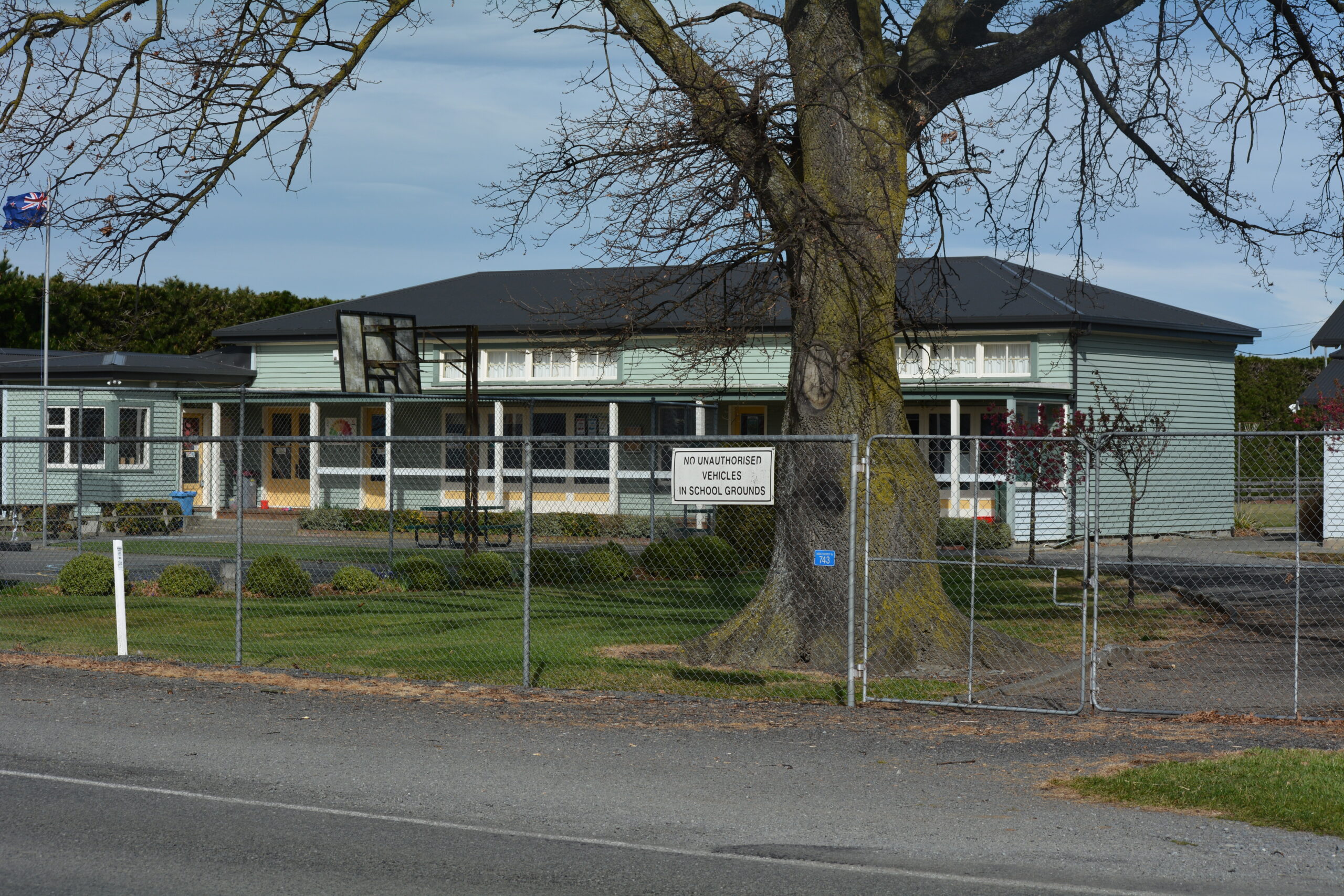
Laghmor School
Thirty two pupils supplied with brought in drinking water for 18 months due to its well exceeding 11.3 mg/L NO3-N. This pollution was only brought to light by the efforts of the regulator Taumata Arowai.
It would be a fair bet this problem remained unrecognised until the regulator’s intervention.