
Senior reporter Radio NZ
A Radio NZ Report
Hundreds came out in Christchurch last night (20 October) to hear politicians from across the spectrum discuss Canterbury’s freshwater challenges, as the region grapples with rising nitrate in drinking water amid tens of thousands more dairy cows consented this year alone.
Geochemist Dr Kevin Brown opened the evening describing the rising nitrates on his Selwyn lifestyle block.
His wife, Dr Jenny Webster-Brown, is a water quality scientist. Both had a personal and professional interest in the issue of nitrates, and constantly monitored the nitrate levels in their water supply, he said.
But he told the crowd of being “caught out” when a bottle-fed orphan lamb almost died last year drinking formula made with water from their well, suffering from methemoglobinemia, or blue baby syndrome, a condition that affects oxygen delivery.
“You’d think we’d be well aware of the problem.”
Danish Research
The maximum amount of nitrate allowed in New Zealand drinking water is based on the World Health Organisation guideline, and is equivalent to 11.3mg/L nitrate-nitrogen, but that was only relevant to acute exposure for babies to prevent blue baby, not adults or long-term exposure, Brown said.
He outlined Danish research that found a statistically significant increased risk of colorectal cancer in water with nitrate-nitrogen of less than 1mg/L.
“This is why we don’t drink our water,” Brown said.
MC David Williams led into the debate by reading from a 1983 book which warned of the inevitable decline of water quality and increase in nitrates in Canterbury as agricultural land use intensified and irrigation and fertiliser use spread.
The following hour saw representatives of Labour, National, the Opportunity Party and the Greens debate the prescience or otherwise of that forecast from more than four decades ago, presenting their stance on the state of freshwater and how to improve it.
In the second half, a panel of experts made up of Otago University researcher Marnie Prickett, Greenpeace executive director Dr Russel Norman, EAT New Zealand CEO Angela Clifford and Gabrielle Huria, CEO of Ngāi Tahu’s freshwater organisation Te Kura Taka Pini, took to the stage to analyse the political responses.
Control Needed
Norman said without addressing the fact there were too many cows, it was impossible to address the freshwater crisis.
He called for more regulation of the dairy industry.
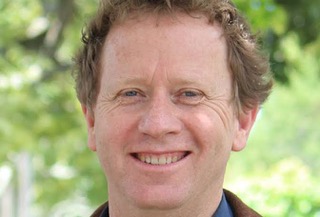
Russel Norman – “more regulation of dairy industry”
Ngāi Tahu’s Gabrielle Huria said a whole way of life had been lost due to pollution.
“Families are really limited, the way we used to eat off our environment when we were a bit hard up, when our kids were little – you can’t go and gather watercress, you wouldn’t fish in any of the streams in North Canterbury – our way of life is gone.
“As a tribe we exist in the lowlands where the rivers meet the sea, and all of them down the Eastern seaboard are filthy.”
Otago University researcher Marnie Prickett said it was important to recognise the scale of the problem and structural barriers to improvement.
“We have to really confront where we’re at right now. In our resource management system that’s just been finalised by the government, there really is – as far as I can see – no way to stop the pollution of water.”
Angela Clifford told the audience there was very little food system governance in Aotearoa.
“No plan, strategy or vision.”
She called on the government to release its national food strategy ahead of the election.
The event comes weeks after the Canterbury regional council voted to discard the nitrate ‘state of emergency’ it voted to declare a year prior.
The council’s annual groundwater survey is due to be released later this month.
Last year’s survey showed nitrate increasing in 62 percent of the council’s 300 test wells.
In June, RNZ revealed the Ministry of Health had quietly launched a review into the health effects of nitrate in drinking water after the Danish government reduced its drinking water limit by almost 90 percent.
The ministry said it expected the review to be released by the end of this year.
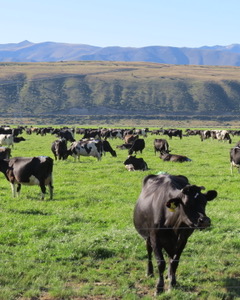
Why does ECan and politicians deny the danger iof niutrates. Would they iuf they ior a close family member got bowel cancer?
Boel Cancer NZ says New Zealand has one of the highest rates of bowel cancer in the world. More than 3,000 people are diagnosed with bowel cancer each year and over 1,200 will die from the disease.
Well MPs and political parties?