
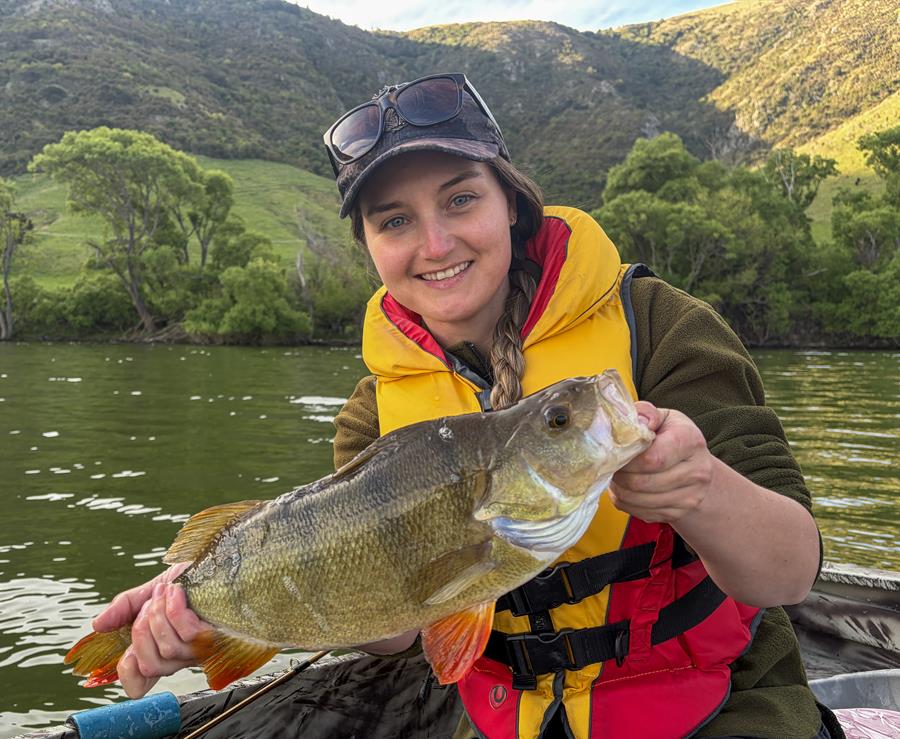
Emily holds up a cracker Red Fin Perch caught using a silver and peach coloured softbait.
After seeing some impressive perch catches appearing on social media in recent weeks, North Canterbury staff decided it was time to see if the rumours were true. An evening trip to Lake Forsyth quickly confirmed what many local anglers already know: this underrated fishery is producing some fantastic perch and appears to be in very healthy shape.
Armed with light spinning gear and a selection of soft baits, first-time perch anglers Harry, Emily, and Jackson set out to test their luck. The standout performers were small smelt-style soft baits, particularly those with natural silver finishes and just a touch of colour along the sides. Fished slowly around likely holding water, they proved irresistible to the hungry perch.
The action came steadily throughout the evening, with fish showing up in good condition and providing plenty of excitement on light tackle. By the end of the session, seven perch had been landed, although the scoreboard told an interesting story. Emily and Harry accounted for every single fish, while Jackson managed to perfect the art of catch-and-release without actually catching anything first, returning home with the dreaded donut.
Beyond the friendly competition, the trip highlighted just how accessible this fishery is. Located only a short drive from Christchurch, Lake Forsyth offers anglers the chance to target a species that often flies under the radar compared to trout and salmon. Yet perch can provide fast-paced action, are relatively easy to target with simple gear, and are a great option for families or anglers looking to try something different.
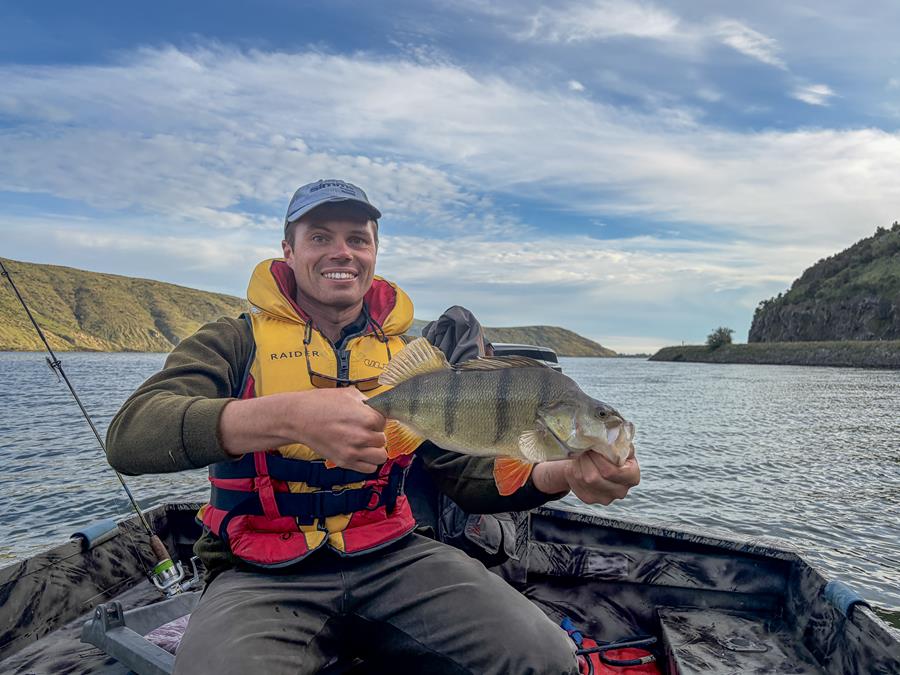
Harry displays one of the Red Fin Perch he caught using a silver and black softbait.
Redfin perch are also widely regarded as one of the finest freshwater eating fish available in New Zealand.
Their white, flaky flesh is mild in flavour and lends itself well to everything from a simple pan fry to a full fish-and-chip feast. For anglers looking to take home a meal, perch can be an excellent addition to the chilly bin.
Even better, there is no daily bag limit for redfin perch in North Canterbury, making them a great species to target if you’re keen to put some quality table fish on the menu while helping keep numbers in balance. Just be sure to utilise any fish you keep and follow all current fishing regulations.
Given the quality of fishing on display, staff are now looking at putting together a short “How-To Perch Fishing” video, covering the basics of tackle selection, soft-bait techniques, and where to start when targeting perch in this close-to-home fishery. If you’ve never given perch fishing a go, Lake Forsyth might just be the perfect place to start.
Before fishing in Lake Forsyth/Waiwera anglers should check with ECan on its status re: algal blooms. There have been several toxic blooms in recent years.
Perch are a real asset in terms of recreational fishing and if you take care with bones, are superb eating. Yet some council and DoC rate them as pest fish. The Marlborough District Council has perch rated as a pest fish, yet none exist in the Nelson-Marlborough Fish and Game region.
Yes it’s true about Marlborough district Council and perch. The bureaucrats in the environment section also classified wallabies as a pest, yet wallabies do not exist in Marlborough.
At a meeting when a council environment section lady said wallabies were a pest in the region, I asked “Where are the wallabies in Marlborough?”
She replied “There are no wallabies in Marlborough.”
So I replied “Then let’s make rhinos and hippos pests in Marlborough.”
She was not amused.
On the same line of thinking, perhaps the Marlborough Council could make piranha a pest fish on its strategy document?
There was a study done in the 1950s on Otago’s Lake Maherangi on the perch issue relative to trout and biodiversity. Anglers were complaining about perch preying on trout.
The study found:-
Trout preyed on the abundant juvenile perch fry as did perch on trout fry.
Native shags preyed on the perch fry and bigger perch.
Eels preyed on perch fry. and on eggs that perch laid on underwater objects.
Nature sorted out a balance in the food chain.
In fact, top trout rivers here down south like the Pomohaka, Mataura and Taieri have perch in them.
In the North Island top trout rivers like the Ruamahunga (Wairarapa) and Manawatu have perch.
I’ve tried catching perch on Mataura River backwaters using pheasant tail and hare & copper nymphs. No takes at all, despite putting the nymphs right on their nose.
However, I have caught many on small spinners and soft plastics. Also on woolly bugger and Hamill’s Killer wet flies. I’m told they are strongly piscivorous and don’t readily eat aquatic insects.