New Zealand has spent decades battling introduced aquatic weeds that choke lakes, smother waterways and reduce the recreational and ecological values of our freshwater environments. Management options are often expensive, labour-intensive or controversial. Herbicides can be effective, but they raise environmental concerns. Mechanical harvesting provides only temporary relief and can be costly to repeat.
This raises an intriguing question.
Could one carefully managed exotic species help control another?
It may sound like a contradiction, yet several countries have been asking exactly that question for many years.
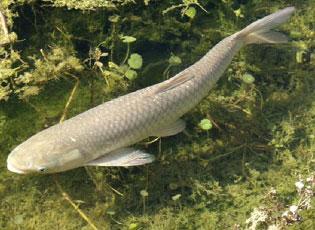
One example is the sterile triploid grass carp. Unlike ordinary grass carp, triploid fish possess three sets of chromosomes rather than the normal two, making them effectively infertile. They cannot establish breeding populations, but they retain a remarkable appetite for aquatic vegetation. In parts of the United States and elsewhere they have been used as a biological control tool to reduce invasive aquatic weeds in selected lakes and reservoirs.
The concept has obvious appeal. Instead of repeated herbicide applications or continual mechanical harvesting, a carefully calculated number of sterile fish can provide long-term weed control while requiring relatively little ongoing intervention.
However, environmental management is rarely that simple.
Aquatic vegetation is not merely “weed”. Healthy submerged plants provide shelter for aquatic insects, habitat for native fish, nursery areas for many species and help stabilise lake sediments. Remove too much vegetation and water clarity may decline, fish habitat can deteriorate and entire aquatic ecosystems may change.
The question therefore is not whether grass carp eat weeds-they certainly do-but whether they can distinguish between undesirable invasive plants and vegetation that performs important ecological functions.
That balance is particularly relevant in New Zealand.
Many of our lakes support internationally recognised trout fisheries alongside native fish populations, waterfowl and significant recreational values. Managing invasive weeds must therefore be considered alongside protecting the habitats that sustain these fisheries.
Fortunately, this is not an entirely theoretical discussion. Sterile triploid grass carp have already been used in carefully controlled situations within New Zealand, particularly in enclosed water bodies where aquatic weeds have become difficult to manage. Their use is tightly regulated and assessed on a case-by-case basis.
That cautious approach seems entirely appropriate.
The question is not whether grass carp should become a widespread solution. Nor is it whether they should replace every existing weed control programme. Rather, it is whether sterile biological control deserves consideration as one of several tools available for managing invasive aquatic vegetation where careful scientific assessment shows the environmental benefits outweigh the risks.
Environmental management increasingly requires us to choose between imperfect alternatives.
Should invasive weeds be controlled with herbicides?
Should they be harvested mechanically year after year?
Or, in carefully selected circumstances, could sterile biological control provide a better long-term outcome?
These are not simple questions, nor should they be answered with ideology alone.
As anglers, our primary interest remains healthy fisheries and healthy freshwater ecosystems. Every management option should ultimately be judged by one standard: does it leave New Zealand’s lakes and rivers in better condition for future generations?
Sometimes conservation is not about choosing between good and bad options.
Sometimes it is about carefully selecting the least harmful of several imperfect ones.